
-
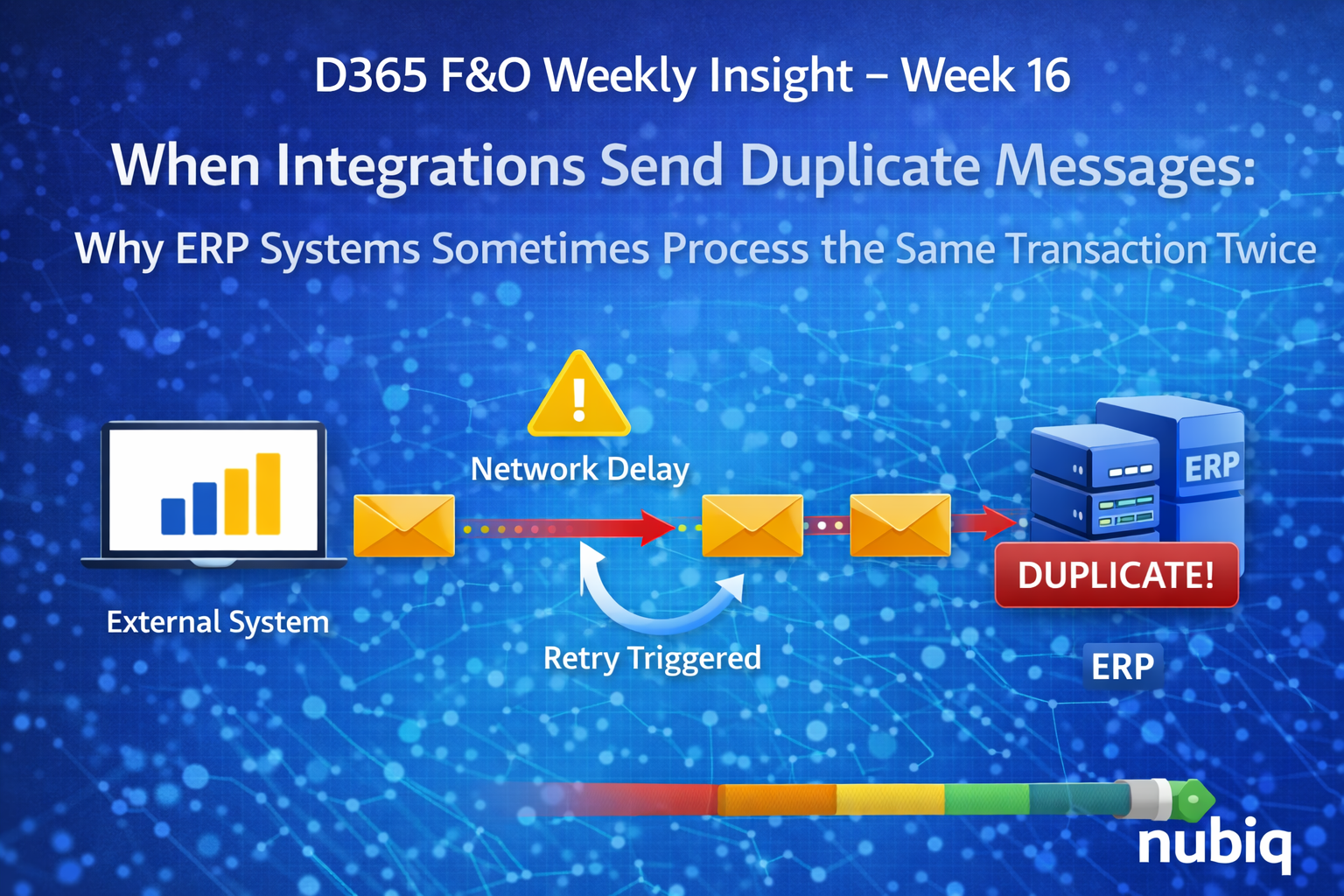
When Integrations Send Duplicate Messages: Why ERP Systems Sometimes Process the Same Transaction Twice Modern Dynamics 365 Finance & Operations environments rely heavily on integrations with external systems. These integrations may connect the ERP system with: • point-of-sale platforms• warehouse management systems• vendor portals• regulatory reporting systems• enterprise analytics platforms While integrations automate business processes…
-
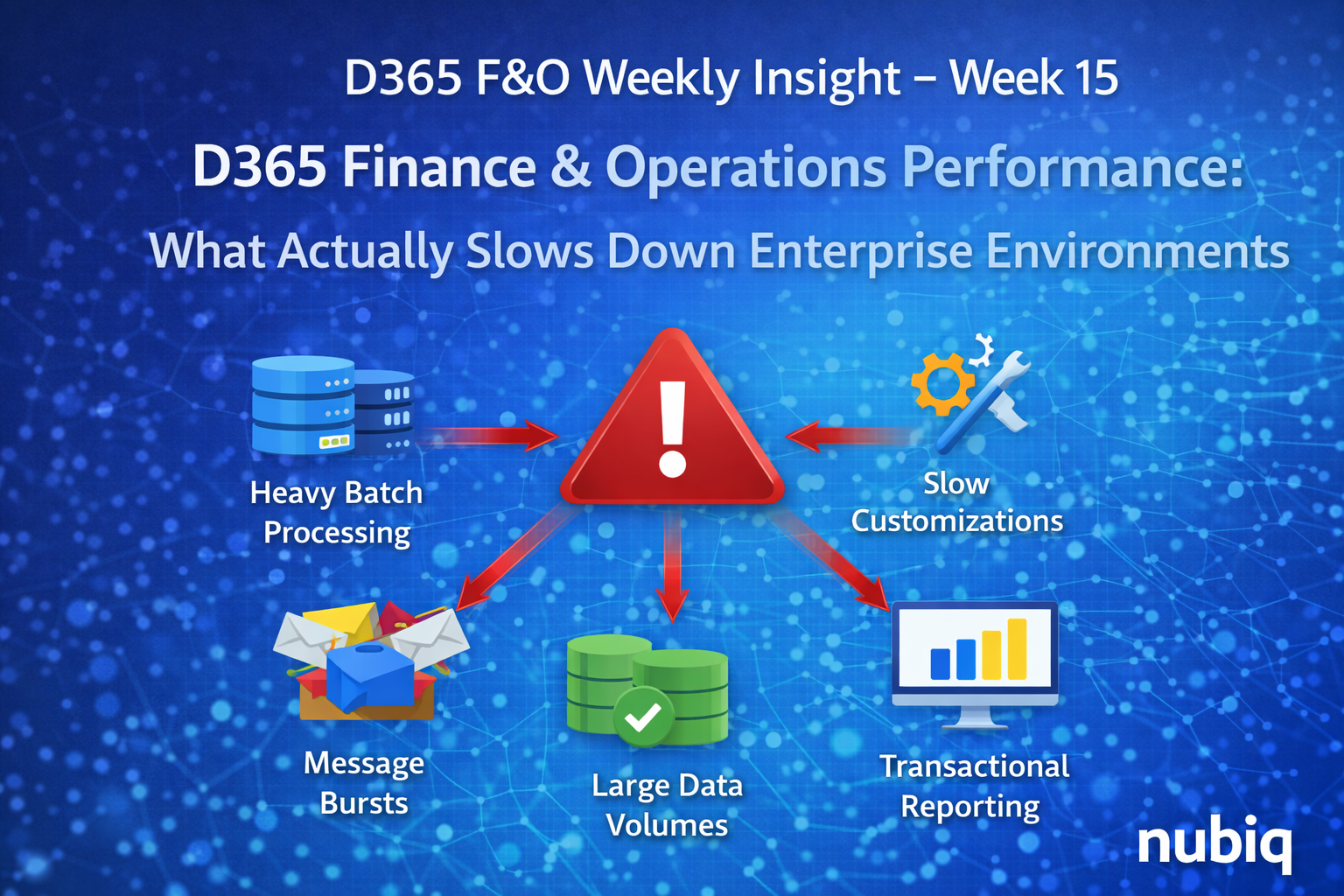
D365 Finance & Operations Performance: What Actually Slows Down Enterprise Environments Performance is one of the most important factors in the success of any Dynamics 365 Finance & Operations implementation. In small environments, performance issues are often easy to identify and resolve. However, in large enterprise deployments with thousands of users and complex integrations, performance…
-
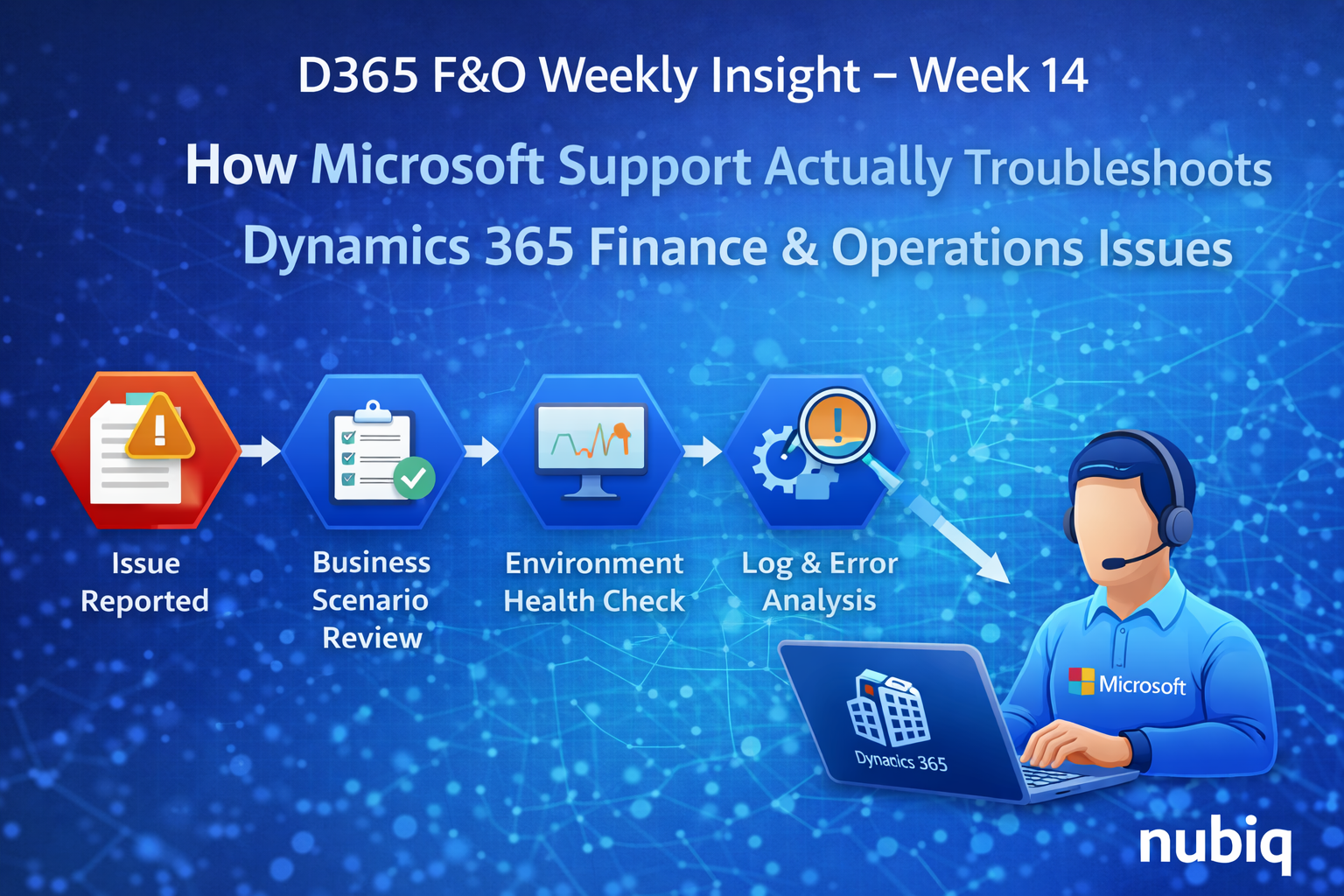
How Microsoft Support Actually Troubleshoots Dynamics 365 Finance & Operations Issues In large Dynamics 365 Finance & Operations environments, production issues occasionally arise that require deeper technical investigation. When these situations occur, organizations often engage Microsoft Support to help diagnose the root cause. From the outside, it may appear that Microsoft simply reviews error messages…
-
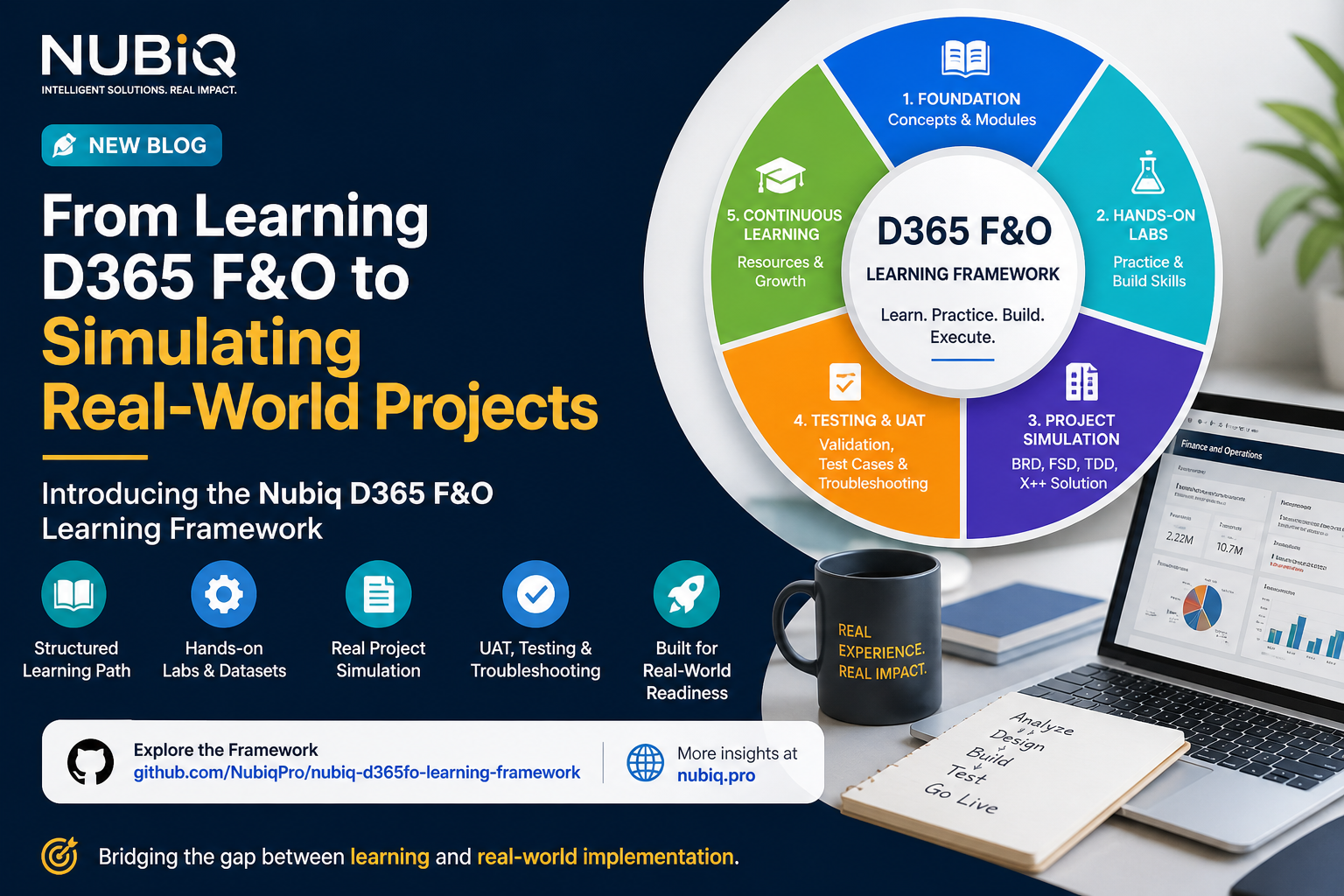
Introduction Learning Microsoft Dynamics 365 Finance & Operations (D365 F&O) is not the real challenge. The real challenge is this: How do you move from understanding features… to thinking and operating like someone who has worked on real enterprise implementations? Most learning resources today fall short.They are either: And as a result, learners often reach…
-
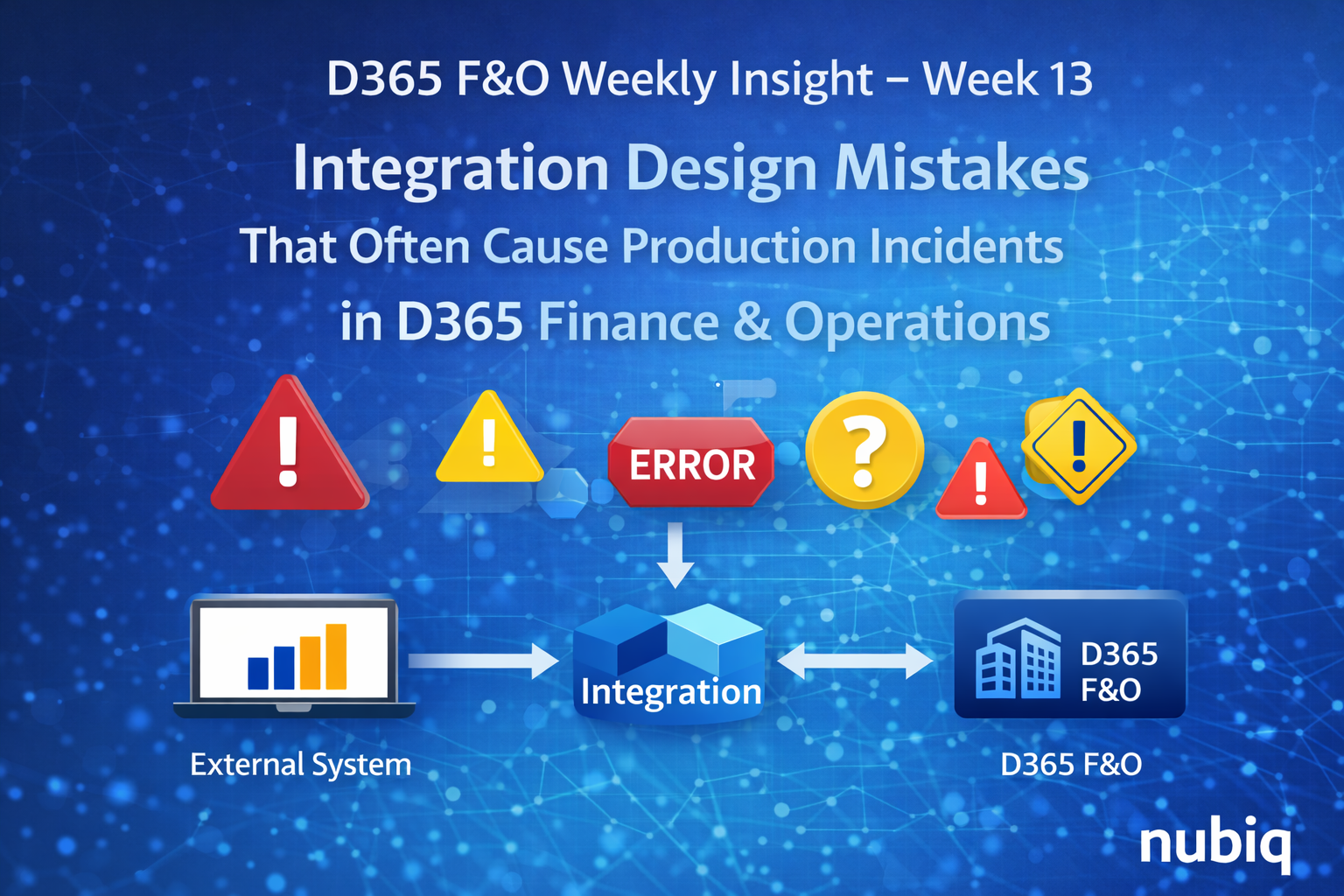
Integration Design Mistakes That Often Cause Production Incidents in D365 Finance & Operations In modern enterprise environments, Dynamics 365 Finance & Operations rarely operates in isolation. Most implementations integrate with multiple external systems such as: • point-of-sale systems• vendor platforms• warehouse management systems• regulatory reporting systems• enterprise analytics platforms These integrations allow organizations to automate…
-
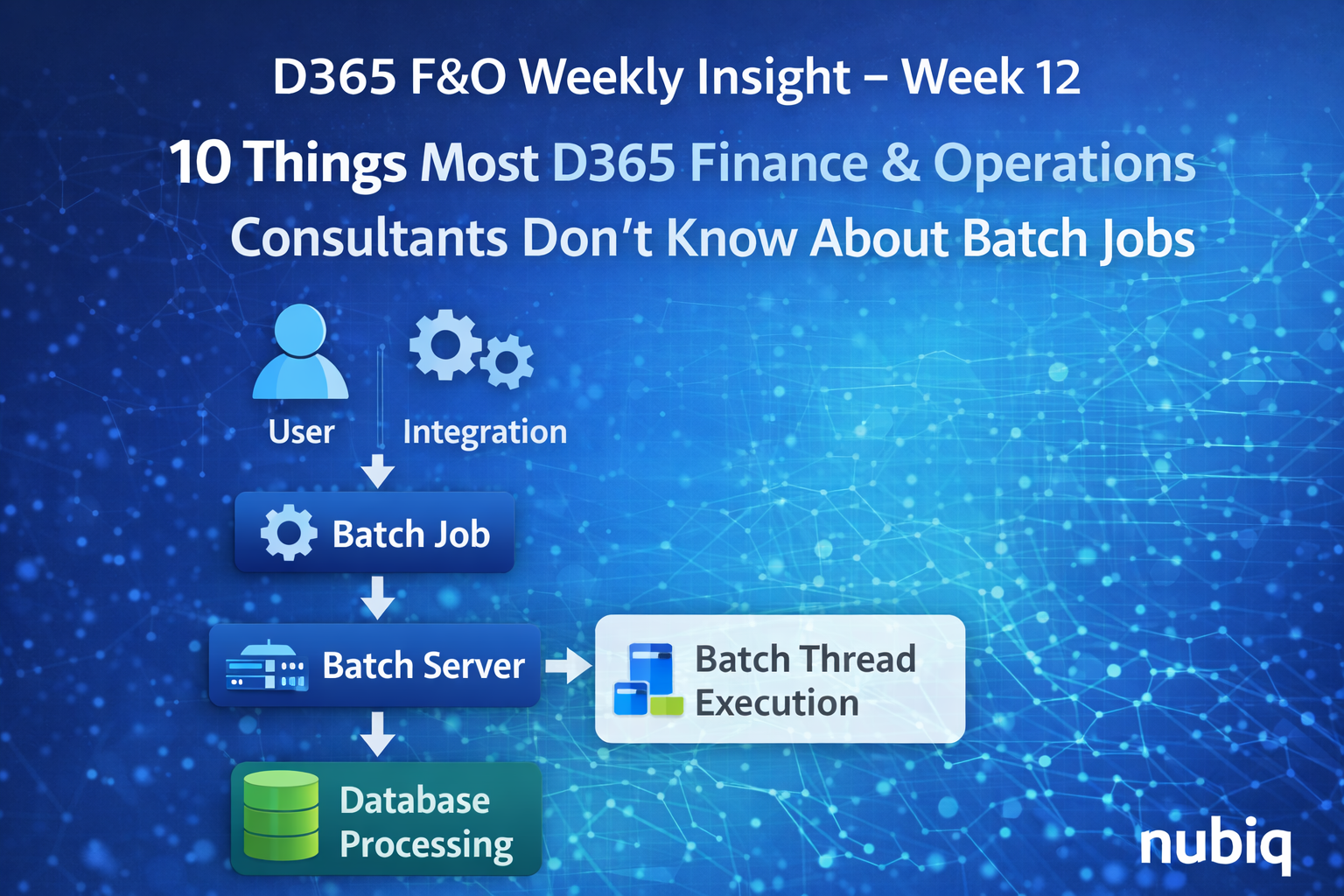
10 Things Most D365 Finance & Operations Consultants Don’t Know About Batch Jobs Introduction In enterprise Dynamics 365 Finance & Operations environments, a significant portion of business processing does not happen when users click buttons in the application. Instead, it happens in the background through batch jobs. Batch processing powers many critical operations such as:…
-
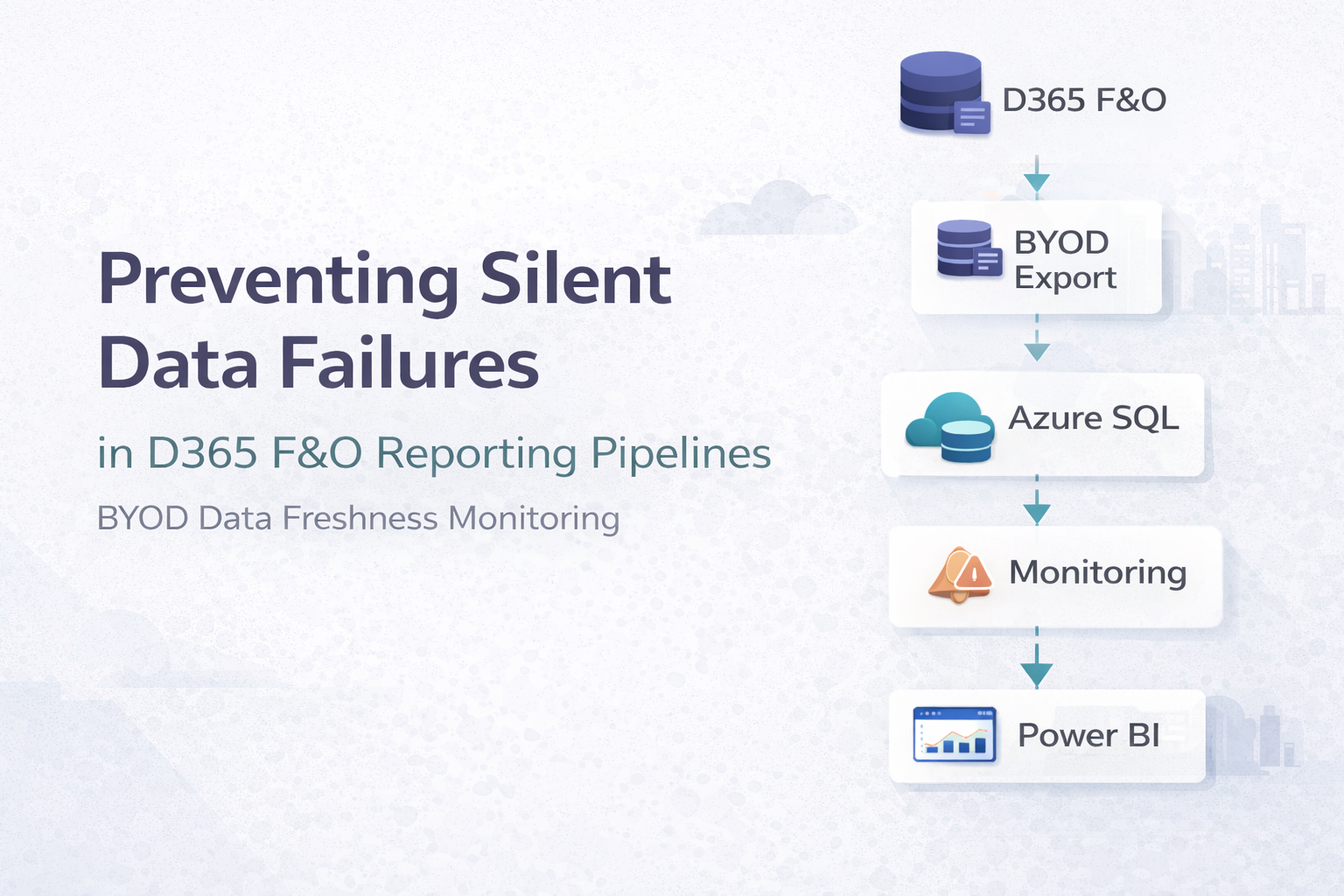
Designing a BYOD Data Freshness Monitoring Architecture D365 reporting pipeline monitoring is critical in enterprise Dynamics 365 Finance & Operations environments because reporting pipelines can fail silently while Power BI reports continue to refresh. Enterprise Dynamics 365 Finance & Operations reporting pipelines can fail silently while Power BI dashboards continue refreshing with stale data. Key…
-
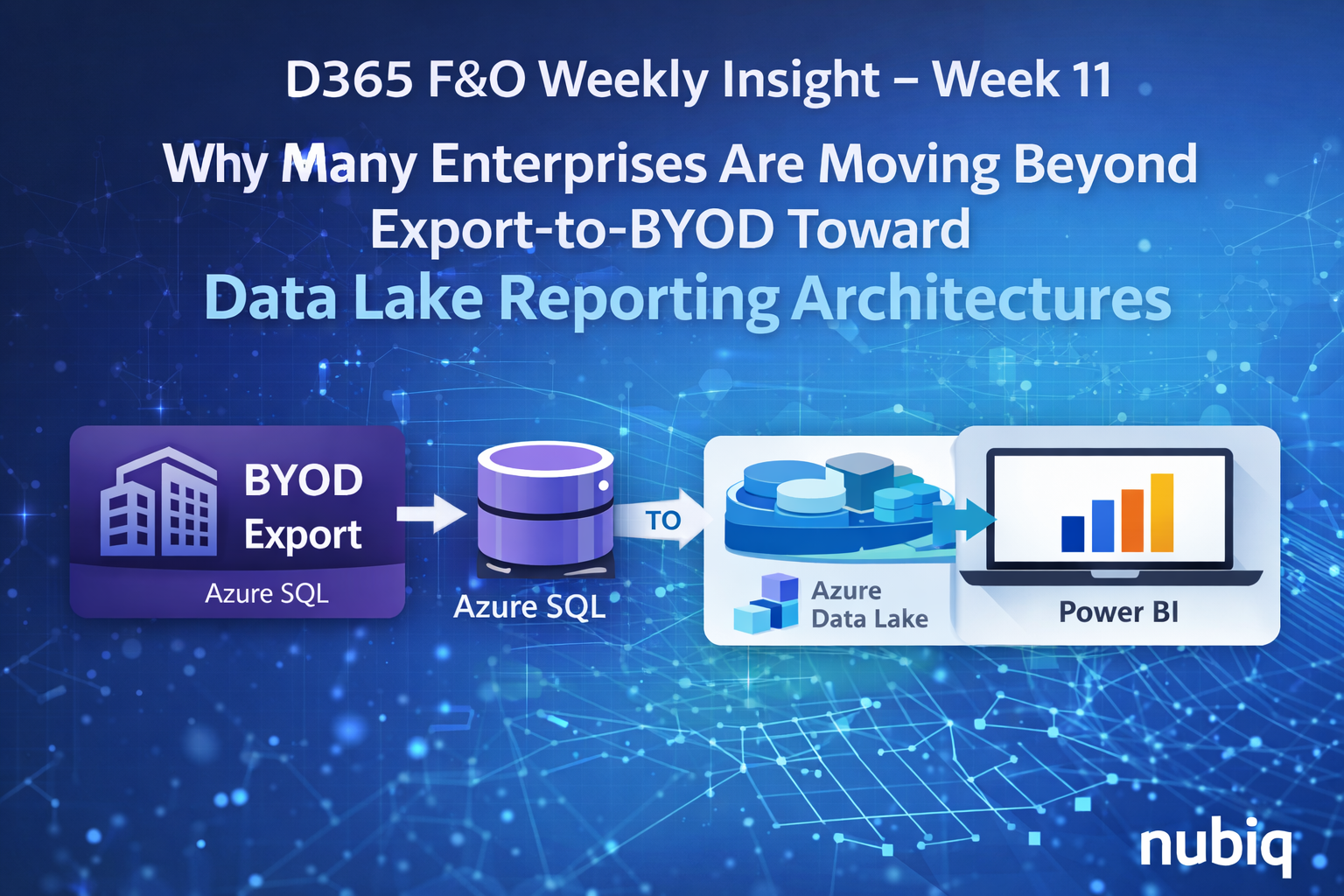
Why Many Enterprises Are Moving Beyond Export-to-BYOD Toward Data Lake Reporting Architectures In many enterprise Dynamics 365 Finance & Operations implementations, operational reporting depends on data exported from the ERP system into external databases such as Azure SQL using the Export-to-BYOD framework. For years, this approach provided a practical way to enable reporting tools such…
-
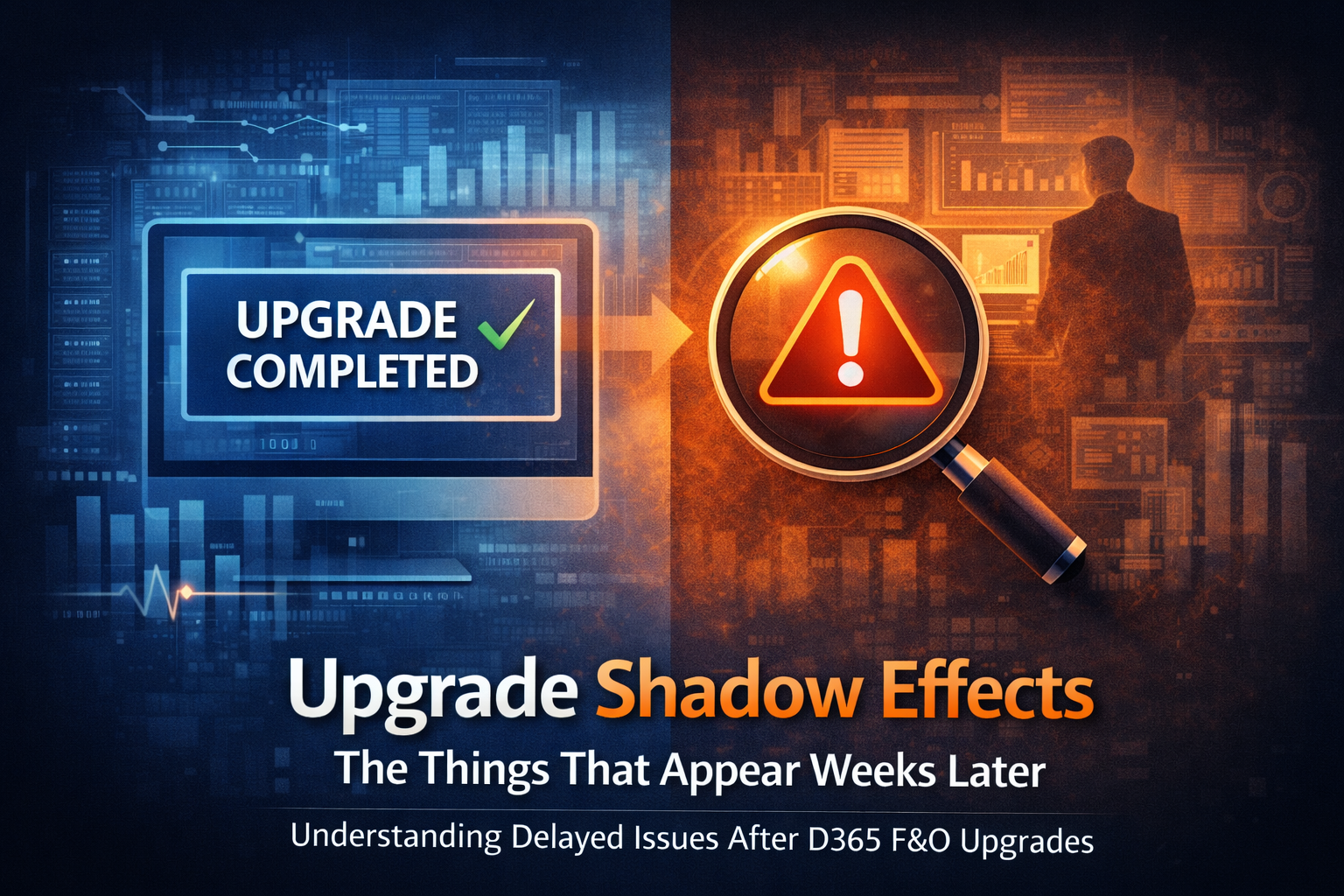
Upgrade Shadow Effects — The Things That Appear Weeks Later Most Dynamics 365 Finance & Operations upgrades don’t fail loudly. The deployment completes.Smoke tests pass.Users sign off.Production goes live. And for a while, everything looks fine. Then — weeks later — subtle issues begin to surface.Not clearly tied to the upgrade.Not immediately reproducible.Not obviously related.…
-
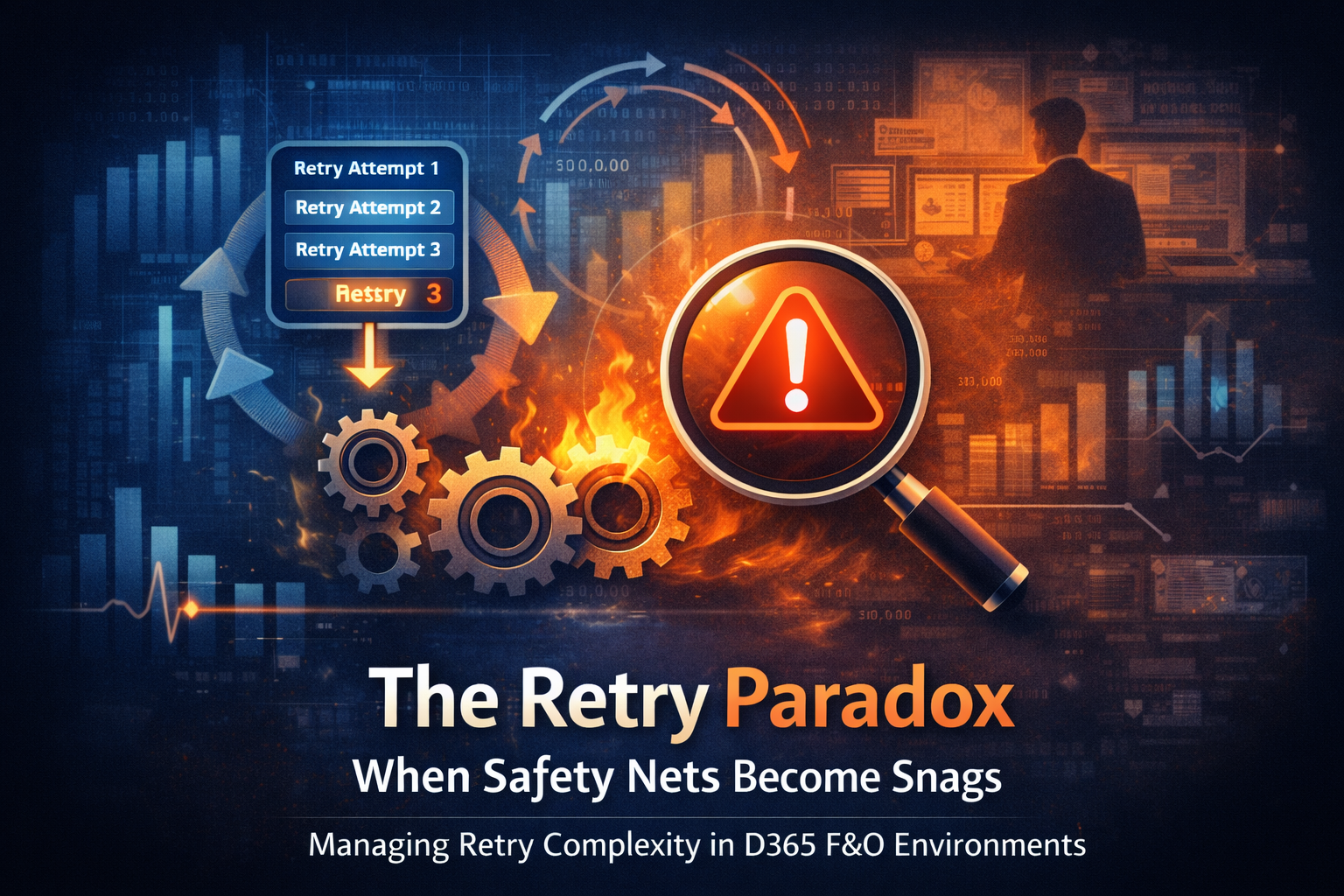
The Retry Paradox — When Safety Nets Become Snags Retries are designed to make systems resilient.In theory, they protect integrations and batch jobs from transient failures. In practice, retries are one of the most common reasons production issues become harder to detect, slower to resolve, and more disruptive over time. This week’s insight looks at…